Stomach acid is extremely acidic—but the 'razor blade' line is misleading
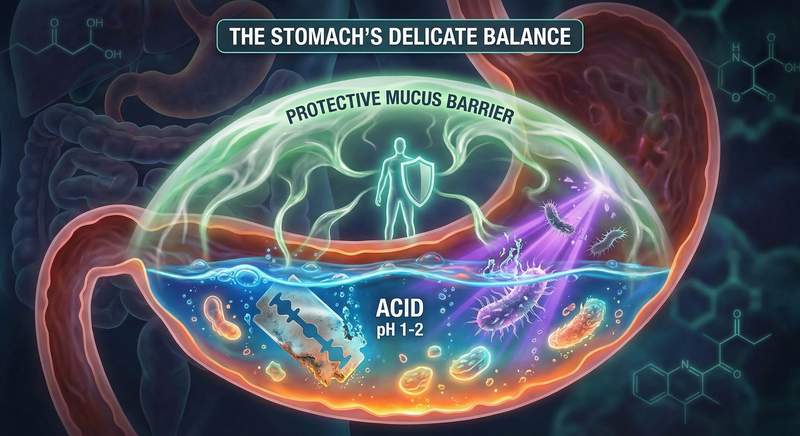
Human stomach acid is indeed extremely acidic, with digestive enzymes working best around pH 1.5 to 2. But the durable fact is not that stomachs are convenient metal-dissolvers; it is that the stomach safely contains acid through a mucus-bicarbonate barrier and other defenses, while swallowed sharp objects remain medical emergencies because of cutting and perforation risk.
Published
Filed under
Byline
 Brainblast archive
2026-03-06-03-33-00-stomach-acid-razor.png (source: app assets)
The fact
“The acids in the human stomach are so powerful that they have a pH of 1 to 2, which is strong enough to dissolve steel razor blades over time. This extreme acidity is essential for breaking down tough proteins and killing harmful bacteria, yet the stomach avoids digesting itself by constantly producing a thick, protective layer of mucus. Without this regenerative mucus barrier, the stomach's own acid would cause severe damage to the organ in a matter of hours.”
Human stomach acid really is fierce. In the NCBI Bookshelf overview of pepsin physiology, pepsin is described as working best at roughly pH 1.5 to 2, which tells you just how acidic the stomach lumen can be during digestion. That is far more acidic than most everyday substances people encounter. So the core idea behind the old factoid is true: the stomach is not mildly sour; it is a deliberately harsh chemical environment built to help digest food.
But the famous "it can dissolve razor blades" version is not the best way to explain that biology. The sturdier scientific point is that acid helps denature proteins, activates digestive enzymes, and suppresses many microbes, not that the stomach is a reliable metal-disposal system. The Merck Manual’s overview of acid secretion emphasizes digestion and regulation, not theatrical feats of corrosion. And the American Society for Gastrointestinal Endoscopy guideline on ingested foreign bodies treats sharp objects such as razor blades as urgent clinical hazards, which is your clue that doctors do not regard stomach acid as something that safely neutralizes them.
The chemistry matters because protein digestion depends on it. According to the NCBI Bookshelf source, pepsinogen is secreted in an inactive form and becomes active pepsin in a very acidic environment. That lets the stomach begin breaking proteins into smaller fragments before food moves into the small intestine. The Merck Manual page adds that gastric acid also creates the optimal pH for pepsin and gastric lipase while helping stimulate pancreatic bicarbonate secretion downstream. In other words, acid is not there as an accidental byproduct; it is part of the stomach’s operating design.
That raises the obvious question: if the stomach contains such strong acid, why does it not digest itself? The answer is one of the most elegant protective systems in human physiology. The Merck Manual says the gastrointestinal mucosa is protected by several mechanisms, including mucus and bicarbonate that create a pH gradient from the acidic lumen toward a near-neutral mucosal surface. The same page also notes tight junctions, mucosal blood flow, and repair processes that limit acid injury. Likewise, the NCBI Bookshelf stomach-physiology material explains that the stomach secretes mucus specifically to guard the lining from its own corrosive environment.
So the real marvel is not that acid is destructive. Plenty of acids are destructive. The marvel is that living tissue can produce acid, deploy it where it is useful, and at the same time keep the underlying organ intact. When those defenses fail, problems follow. The Merck Manual points out that interference with mucosal defenses—such as from nonsteroidal anti-inflammatory drugs or Helicobacter pylori infection—predisposes people to gastritis and peptic ulcer disease. That is the clinically important lesson: stomach acid is powerful, but it is normally kept in check by an equally sophisticated barrier system.
This is also why the razor-blade line needs caveats. It tempts people to think only about chemical strength, when swallowing sharp metal objects is first and foremost a mechanical danger. The ASGE guideline explains that most foreign bodies pass without intervention, but sharp-pointed objects are a special category because they can injure the gastrointestinal tract and may require urgent endoscopic removal. A razor blade can cut, lodge, or perforate tissue long before anyone should be speculating about how much corrosion acid might eventually cause.
That clinical framing matters more than the pub-trivia framing. Yes, hydrochloric acid in the stomach is strong enough to sound dramatic. Yes, the lumen can reach the low pH range summarized by the NCBI Bookshelf pepsin entry. But the body is not a beaker, and the stomach is not an industrial acid bath. Food, mucus, gastric emptying, tissue structure, and the shape of the object all affect what actually happens inside a person. The ASGE guideline exists precisely because real gastrointestinal risk is about anatomy and injury, not just raw acidity.
So if you want the fact in a form that survives contact with actual physiology, here it is: human stomach contents can be extremely acidic, often in the range where pepsin works best, around pH 1.5 to 2, as described by the NCBI Bookshelf source. The stomach avoids digesting itself because of mucus, bicarbonate, tight junctions, blood flow, and repair mechanisms summarized by the Merck Manual. And when sharp objects are swallowed, clinicians worry about perforation and bleeding, not a neat demonstration of acid power, as the ASGE guideline makes clear. That version is slightly less cinematic—and much more true.